
Charleston County Active Warrants Explained
Active or outstanding is a status only the issuing court can truly confirm. The Charleston County Sheriff's Office opens a public name search for records it has cleared for release, and its own notice warns that a hit does not prove a warrant is still active. Service, a return, a recall, or slow updates can all change what a screen shows. The official CCSO form is one sensible starting point. It asks for a last name; the first name is optional. It does not reach every municipal, magistrate, Family Court, or federal record. A blank result is not a clearance certificate.
Charleston County Warrant Activity
The CCSO monthly report for April 2025 gives a dated picture of one month's workload: 123 warrants received, 183 served, and 13 returned. The categories cover Family Court bench, General Sessions bench, Magistrate bench, arrest, and check warrants. Remember what those numbers count. They are agency actions, not unique people and not a tally of open warrants across Charleston County. A year-to-date figure simply adds earlier months. The report itself warns that amended charges and expungements can shift the totals, so keep the period and the agency beside any number. An aggregate will never tell you one person's status.
How Charleston County Tracks Active Warrants
The Charleston County Sheriff's Office receives warrants sent for service, assigns deputies, and verifies the information on each paper. The court stays the source for the issuing order and what happens in the case. Several city police departments keep their own warrant logs, so one public name search cannot join every court and law-enforcement record. For a possible Sheriff warrant, call the Warrants Unit at (843) 529-7391 during its listed weekday hours. A municipal matter belongs with the city police or court. For General Sessions context, check the Clerk of Court's Public Index, then confirm service status on its own. The CCSO structure page describes how warrant work fits inside the larger agency.
Use the Warrants Unit for a current status question about its own records.
Charleston County Status Terms
Every status word needs context. "Received" means an agency took in a warrant for processing. "Served" records an attempt that ended in service. "Returned" means the paper or status went back to the issuing court. "Recalled" and "quashed" are court actions, while "expunged" belongs to a separate record-removal process. These terms are not interchangeable. A case can keep going after a warrant is served, and a Charleston County search may lag behind a court's newest order. Ask which office can verify the specific field you are looking at.
- Outstanding
- Ask the issuing office whether the warrant is still in force.
- Returned
- A service or process record was sent back to court.
- Recalled
- The court withdrew the warrant.
- Expunged
- A separate legal process limits or removes a record.
Inside an Active Warrant Record
A public entry can carry a name, case or warrant number, issuing court, charge, bond, and an action or service status. The county Sheriff search does not promise every field will show. Docket details may differ from the working file deputies use. Pull a number from your own court paper so the clerk lands on the right record. A name plus a date of birth proves nothing about identity. Ask the office to confirm the entry is yours and whether a later order changed its status.
| Number | Use the identifier printed on your own notice. |
|---|---|
| Court | Points to the clerk who can explain the docket. |
| Charge | Identifies the case context, not guilt. |
| Service | Confirm with the Sheriff or serving police unit. |
| Next step | Ask the court about bond, appearance, or a motion. |
Warrant Roundups and Most-Wanted Lists
Charleston County runs no countywide warrant amnesty or roundup event for 2024 through 2026, and CCSO posts no dedicated most-wanted roster. It does publish a warrant search and community tip information. Treat those as tools, not as a list of names or photographs. The CrimeStoppers program is a way to submit a tip, not a way to confirm your own record. It offers phone and text routes and a reward-code process. Its anonymous-tip page also separates urgent danger from routine reporting.
Charleston County Search Gaps
A warrant can drop out of a public result for many reasons: it is not cleared for release, it sits in a municipal or magistrate court, it is sealed, it involves a juvenile, or the data has not synchronized yet. CCSO's disclaimer adds that information may be inaccurate or stale. Contact the court named on the paper instead of running searches under other people's names. SLED CATCH is not a statewide warrant index. Its official notice says wanted-person information is excluded, so read the official CATCH notice before using it for any warrant question. Federal matters run through federal court and U.S. Marshals channels. These limits are exactly why the issuing court matters in Charleston County.
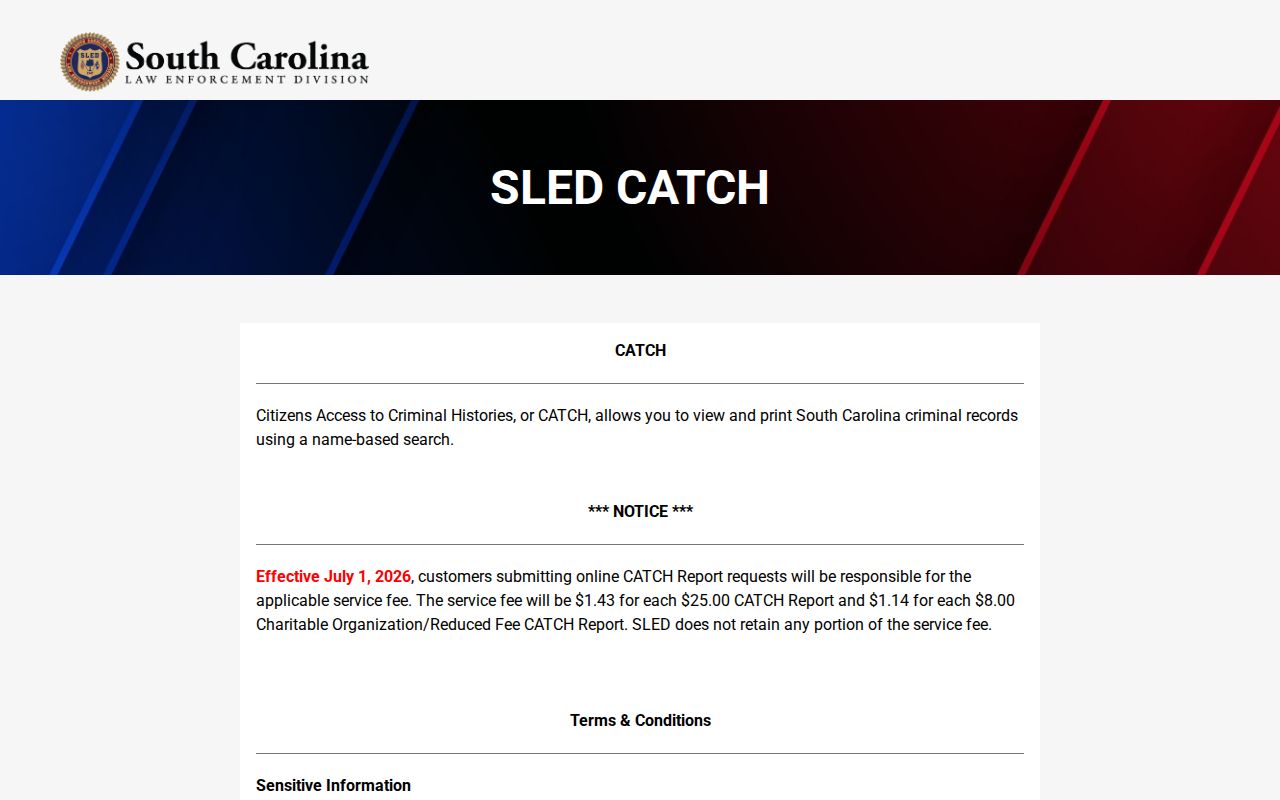
Use the issuing court or Sheriff for confirmation.
When Your Name Is on the Warrant List
What if the Charleston County search turns up your own name? Stop before you go anywhere. Call the Warrants Unit or the issuing court first. Ask what kind of process it is, which court issued it, whether you need an appointment, where a bond hearing would take place, and which papers or payment methods are accepted. A South Carolina lawyer can help you plan a voluntary surrender or ask the court for a recall when that fits.
CCSO does allow appointment-based surrender for certain VCL warrants. That is not a promise of release, and it does not cover every case. So do not show up at an unfamiliar Charleston County office without current instructions in hand. Once you act, keep every receipt, release order, bond condition, and court date.
A name match is not identity confirmation. Do not approach, follow, or detain another person based on an online result.
Charleston County After-Hours Checks
For routine warrant confirmation, the Charleston County Sheriff's Warrants Unit takes calls on regular weekdays. After hours, its instructions point you to dispatch or local law enforcement. The numbers vary by context: CCSO materials list (843) 202-1700 for Consolidated Dispatch in one place and (843) 743-7200 for non-emergency dispatch in another. Trust the live instruction on the official page, not a number quoted secondhand. CrimeStoppers is a separate channel from both dispatch and the Warrants Unit. Call 911 only for immediate danger. And an anonymous tip line is the wrong place to ask whether your own warrant has been recalled.
Charleston County Active Warrant Privacy
Charleston County publishes its warrant records through official channels, in aggregate form. No names, photos, mugshots, home addresses, or case identifiers appear here. The Public Index stopped displaying home addresses beginning January 1, 2026. It also offers a process for redacting sensitive fields, and juvenile records stay restricted. Use these official systems to check your own status or help a family member reach the right court. A warrant result is not a tool for monitoring a neighbor or deciding how to treat someone. For current status, the issuing court and the serving agency in Charleston County are the proper sources.